Natural Egg Dye

Natural Dyed Easter Eggs

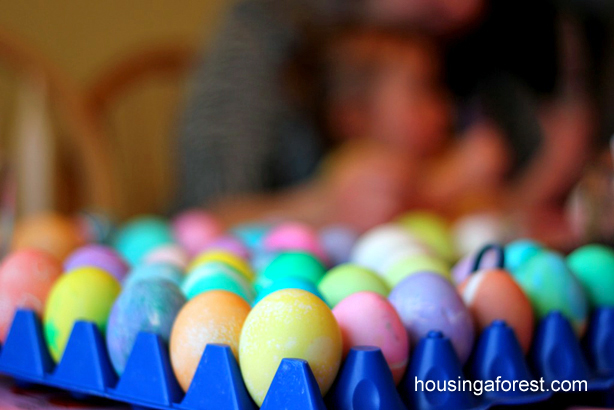
Dyeing Easter eggs is one of our favorite Easter traditions.  Recently, I have been in awe of all these beautiful natural dyed Easter eggs all over Pinterest.  This is something that I have been wanting to try it for a few years, but for one reason or another it has not happened until now.


How to make natural dyed Easter eggs

How to make Natural Egg Dye

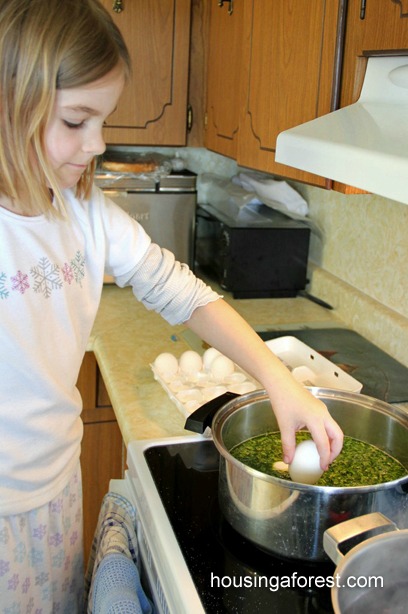
After reading a few posts on which combinations of veggies and fruits created the best colors, we stated chopping.  We chose to use blueberries, spinach and beets.

We placed our eggs in boiling water, vegetables and vinegar, and boiled for 30 minutes.

Most of the posts I read, strained the veggies from the dye.  I decided to skip that step and place my eggs in along with all the chopped up veggies.  I’m not sure if that was where this little project went wrong or if it was something else…but check out these muted colors.
How to make natural dyed Easter eggs

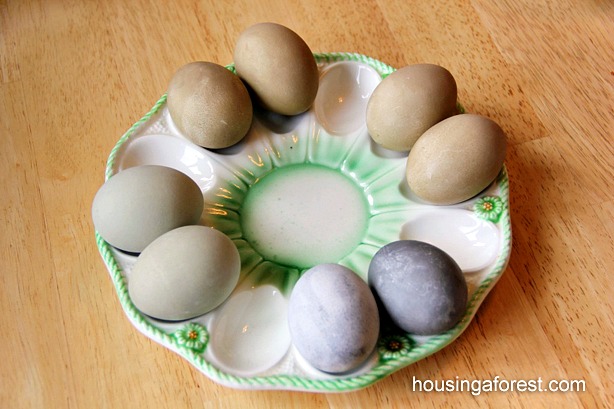
The front 2 eggs were dyed in blueberries.  The left 2 eggs in spinach and the back 4 eggs in beets.  I was expecting bright beautiful eggs, however we ended up with muted and dull colors.  Weird.
How to make natural dyed Easter eggs

The kids claimed the eggs looked like potatoes, bummer.  Totally not the look I was going for.  I guess I should keep trying.  Anyone else tried natural dyed easter eggs with good results? 

How to make natural dyed Easter eggs

For more fun ways to dye Easter eggs, check out our:

Sharpie Tie Dye Easter Eggs

Melted Crayon Easter Eggs

Kool-aid Easter Eggs

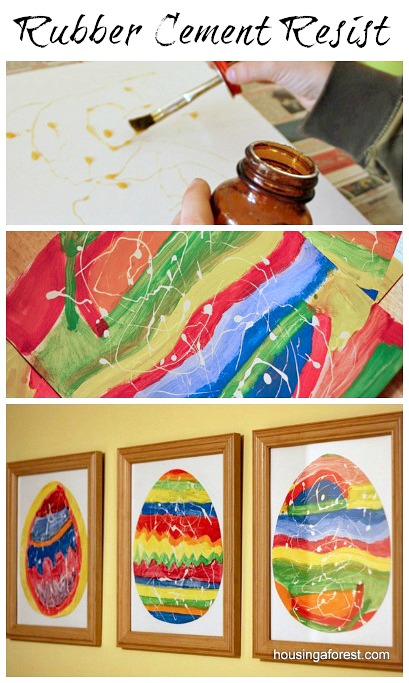
Rubber Cement Resist

Watercolor Techniques for Kids ~ Rubber Cement Resist

Rubber cement is a traditionally used as a paper glue however, it is a really versatile art medium as well.  One of my favorite watercolor techniques is to use rubber cement to create a simple resist.  The process is really easy, and the paintings always turns out great.

Watercolor Techniques for Kids ~ Rubber Cement Resist

This post contains affiliate links for your convenience.

Materials Needed:

Watercolor Techniques for Kids ~ Rubber Cement Resist

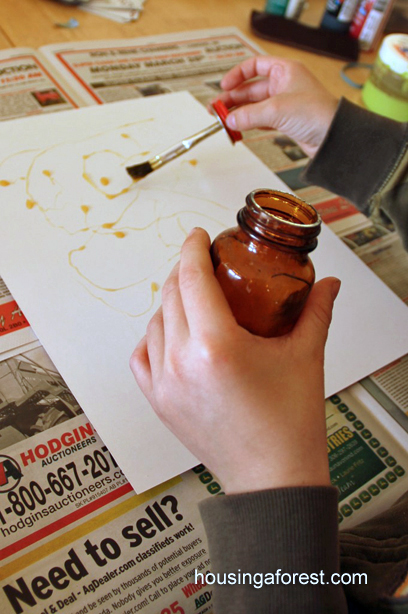
Start by dribbling Rubber Cement straight out of the bottle all over your thick paper.  We used poster board.  The kids found that moving their hands in a wiggly, back and forth motion worked best.

Watercolor Techniques for Kids ~ Rubber Cement Resist

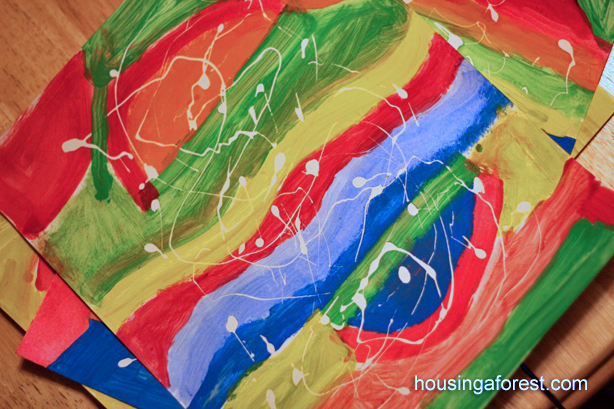
Once the rubber cement is dry, paint over the entire paper.  You can use slightly thinned acrylics, tempera paint or liquid watercolors all with great results.  You will have to be careful if you are using watercolor cakes, the color tends to rub off in the next step.

Watercolor Techniques for Kids ~ Rubber Cement Resist

Gently rub over the rubber cement with your fingers.  This will remove any rubber cement residue from your paper.  You will be left with a beautifully painted paper with squiggly lines through it.

Watercolor Techniques for Kids ~ Rubber Cement Resist

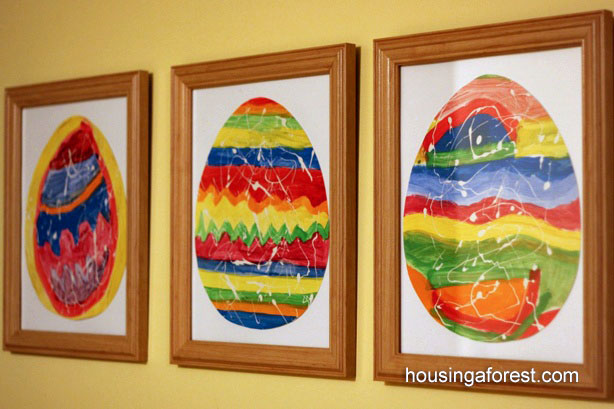
We cut our paintings into Easter egg shapes.  I love how they turned out and they add a bright splash of spring color to Moms kitchen.

For more simple Watercolor Techniques, check out our:

Spring Oil Pastel and Watercolor Resist

Raised Salt Painting

Painting on Wet Glue

Georgia O’Keeffe Flowers

Melted Crayon Easter Eggs

Dying Easter Eggs

We recently enjoyed dying Easter eggs with our cousins.  This is one of my kids favorite Easter activities, and one of mine as well!  The kids love dunking the eggs in bright dyes and getting creative with crayons and rubber bands.  This year we tried making Melted Crayon Easter Eggs, and they turned out great!

Dying Easter Eggs ~ Melted Crayon Easter Eggs


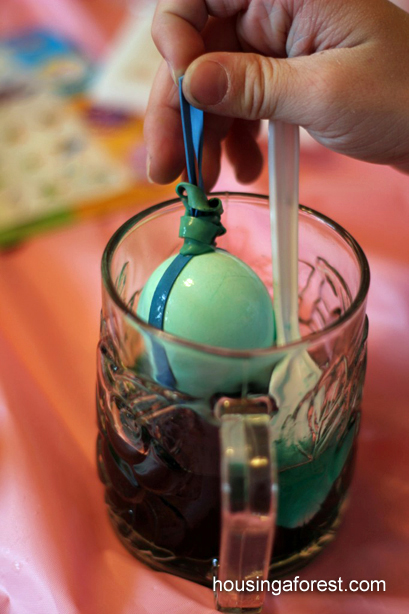
One of the cousins got creative with rubber bands and made this little egg holder.  Kaleb loved it and used it to dip all his eggs.  The tail was prefect for keeping his fingers out of the dye.

Dying Easter Eggs

We had boiled and cooled the eggs earlier (for regular egg dying).  Ideally, you would sprinkle the crayon shavings on freshly boiled eggs.  However, it we ended up rewarming our cooked eggs in boiling water with no problems.

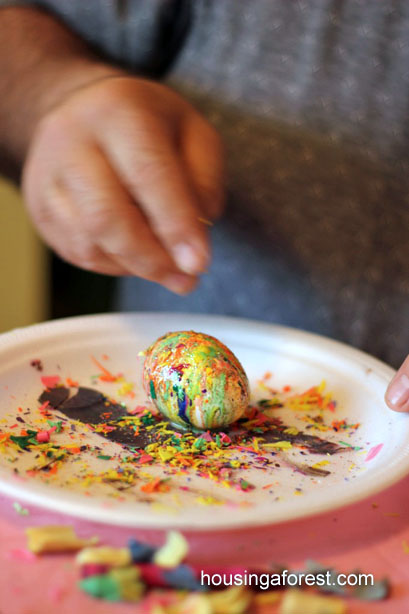
Sprinkle the crayon shavings onto the hot eggs.  The egg will melt the crayons and create a beautiful pattern.  Make sure you cover work surface or use a paper plate like we did.  It can get a little messy.

Melted Crayon Easter Eggs ~ a fun way to dye Easter EggsPlease use caution when working with hot eggs and melting wax!

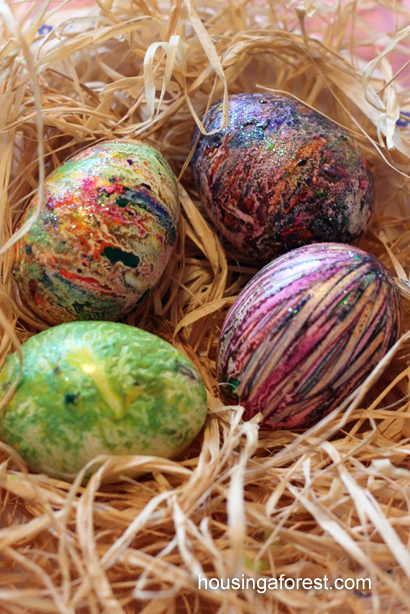
I love how the melted crayon eggs turned out.  We also added some glitter for extra sparkle while the crayon was still warm.  You can never have enough sparkle at Easter:)

Melted Crayon Easter Eggs ~ a fun way to dye Easter Eggs

For more creative ways ideas on dying Easter Eggs, check out our:

Sharpie Tie Dye Easter Eggs

Volcano Easter Eggs

Kool-aid Easter Eggs

Naturally Dyed Easter Eggs