Credit Card Art

Process art using Credit cards

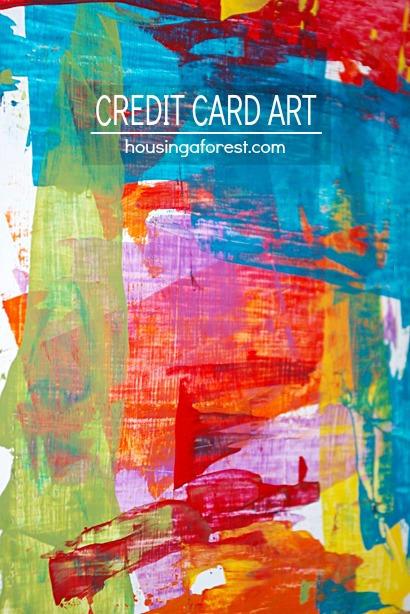
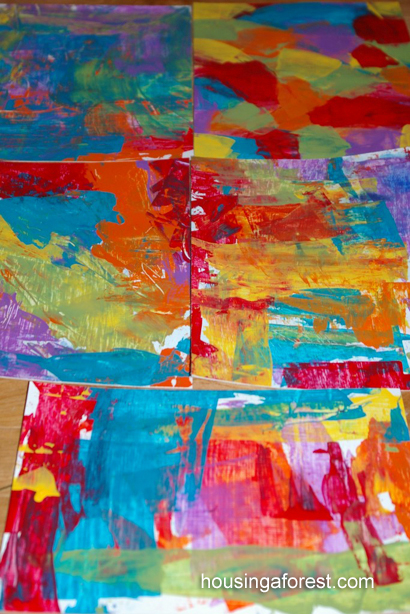
We have a number of plastic cards floating around our house.  My kids love collecting hotel key cards and used gift cards.  I was starting to weed through their growing collection, when I remembered one of my favorite painting assignments.  It was a creative painting project where we were encouraged to use common items to explore paint.  I’m sure you know where I am going with this…creating Credit Card Art.  I love the effect that the scraping creates and the layers of colors that can be achieved.

Painting with Credit Cards ~ beautiful process art

Painting Rainbows without Brushes

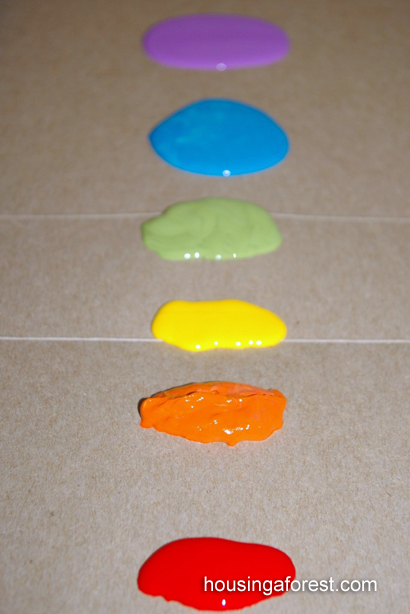
The kids were excited to begin and asked if they could paint with all the rainbow colors.  It’s almost Saint Patrick’s Day so the perfect time to paint rainbows.  The girls did voice their concern for the coveted plastic cards, and wanted to make sure that they would look clean and paint free when we were done.  After I assured them that no harm would come to the cards, they were ready to begin.  Who knew that plastic was so treasured!

Painting with Credit Cards ~ rainbow paint colors

Credit Card Painting Supplies:

  • Acrylic paint
  • Plastic Cards ~ old gift cards, hotel keys, store loyalty cards etc.  You could also use any straight edge, even cardboard works great.
  • primed cardboard or other painting surface

Painting with Credit Cards ~ beautiful process art

Painting with Credit Cards

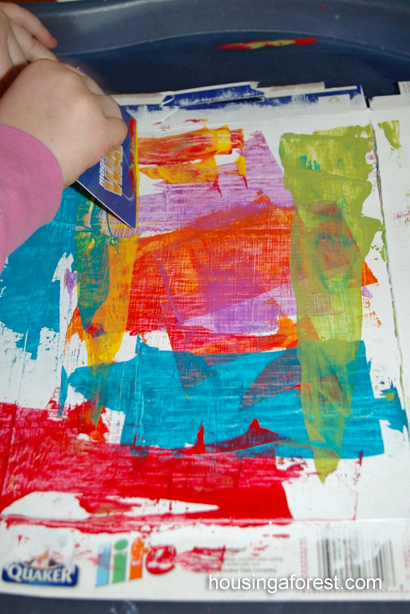
The girls dipped their credit card in the paint and then proceeded to drag/scrape it across their paper.  The process is so simple, and the kids loved it.

Painting with Credit Cards ~ beautiful process art

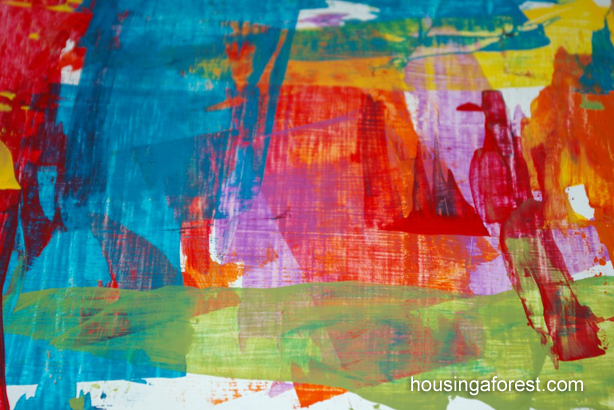
I love how these turned out.   I’m sure that we will be revisiting this again soon if I’m allowed to borrow their plastic again!

Painting with Credit Cards ~ beautiful process art

Looking for more Process Art Activities?  Check out our:

Painting on Wet Glue

Compass Painting

Rainbow Q-tip Painting

Microwave Puffy Paint

Cleaning Recipes

As you get to know me, you will learn that I love being frugal and getting a great deal.  So when my friend suggested that we try making laundry soap together I was excited to give it a try, but to be honest I was skeptical at the same time.   My son has eczema and has reacted to a number of different laundry soaps that I have tried.  We found that Tide free and clear has worked the best for him, and I did not want to be the cause of another reaction.

With 3 kids we have LOTS of laundry, and commercial laundry soap is not cheap!  We have been making laundry soap for about a year and our family has had no problems with sensitive skin.  It cleans our clothes really well and I love that it is inexpensive.  The recipe we use is from the Duggar Family Website.


Liquid Laundry Soap

4  Cups – hot tap water

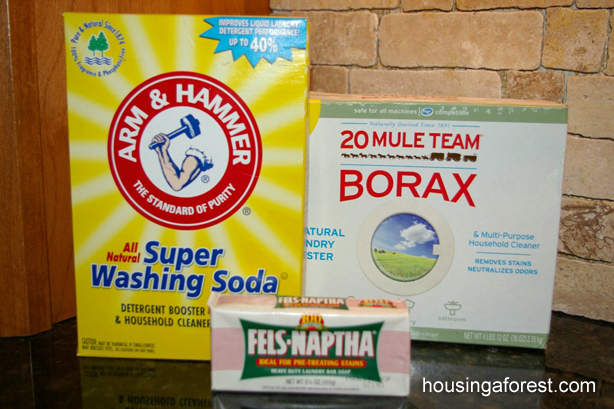
1 Fels-Naptha soap bar

1 Cup – Arm & Hammer Super Washing Soda*

½ Cup Borax

Grate bar of soap and add to saucepan with water. Stir continually over medium-low heat until soap dissolves and is melted.  It takes a bit to get all the soap to melt.

Fill a 5 gallon bucket half full of hot tap water. Add melted soap, washing soda and Borax. Stir well until all powder is dissolved. Fill bucket to top with more hot water. Stir, cover and let sit overnight to thicken, it will be a thick gel.  Once it has set overnight I use a long hand drink mixer to stir the gel to a liquid consistency, but a long paint stick will work as well.

Stir and fill a clean used, laundry soap container half full with soap concentrate and then fill rest of way with water. Shake before each use since the soap has a tendency to gel as it sits.

Yield: Liquid soap recipe makes 10 gallons.  Since you are mixing the concentrate 50/50 with water. I use about ¼ Cup per load (Approx. 640 loads).  Add a bit more if the clothes are really soiled.

*Arm & Hammer “Super Washing Soda” is found in the laundry isle.  Baking Soda and Arm & Hammer Detergent will NOT work – It must be sodium carbonate!!
 

Vinegar Downy Ball

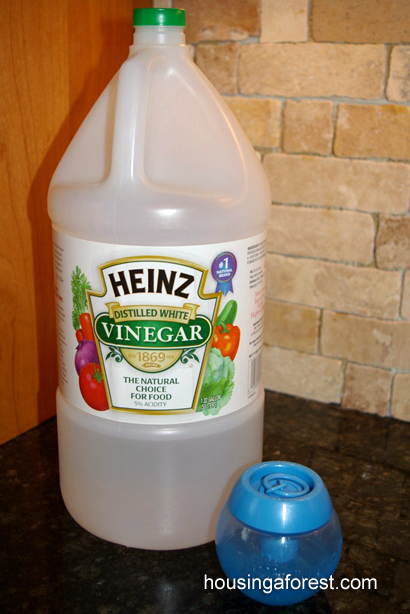
Instead of commercial fabric softeners, I use a Downy Ball filled to the marked line with white vinegar in my washer.  The vinegar works similar to commercial fabric softeners and it is a fraction of the cost.  Our clothes don’t come out smelling like vinegar either.  I love not using fabric sheets in my dryer!  I buy vinegar at Costco in a large container.
 

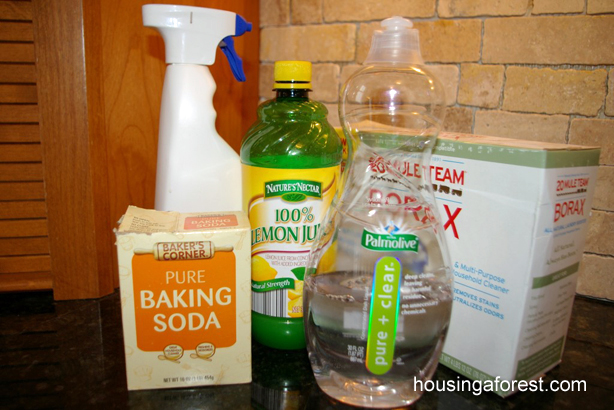
All Purpose Cleaner with Lemon

2 Cup Water

2 Tbsp Lemon Juice

1/2 tsp Liquid Dish Soap

1 T Baking Soda

1 tsp Borax

Mix all ingredients into a spray bottle and shake.  I use this cleaner mostly in the kitchen, but it works great in the bathroom as well.  I reuse the spray bottles from commercial cleaners, just make sure to rinse out well.
 

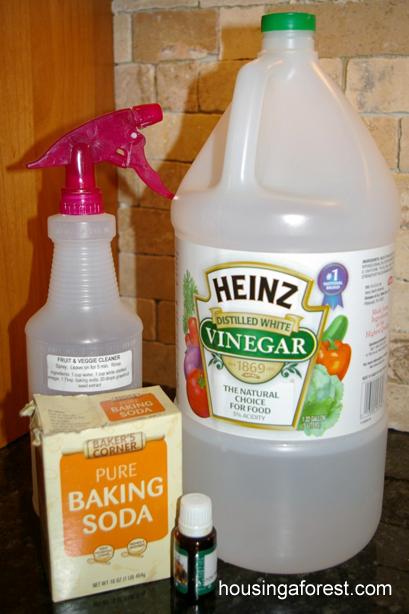
Fruit and Veggie Cleaner

1 Cup Water

1 Cup White Distilled Vinegar

1 Tbsp baking soda

20 drops grapefruit seed extract

Mix all ingredients into a spray bottle and shake.  Spray onto your fruit, leave on for 5 minutes and rinse off.  I use a new spray bottle since you are spraying on food.
 I would love to hear what your favorite cleaners are and any recipes that you have found to work really well.

Melting Art

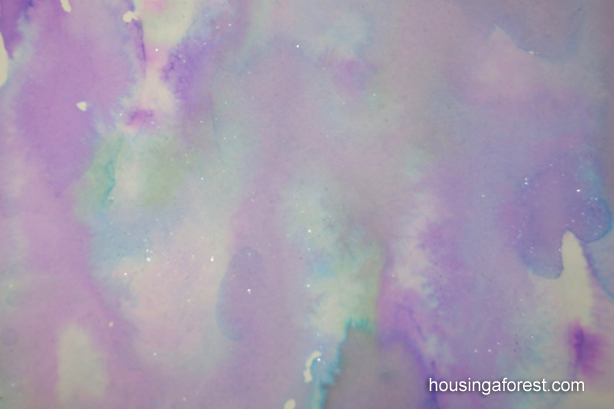
It is still snowing, so we are making the most of it before spring hits!  Remember the wonderful snowman the kids made in the kitchen a few weeks ago.  We followed the same concept, but this time we decided to see what it would look like as the painted snow melted.

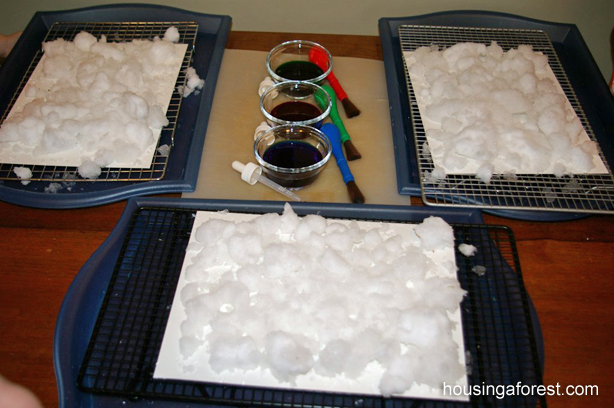
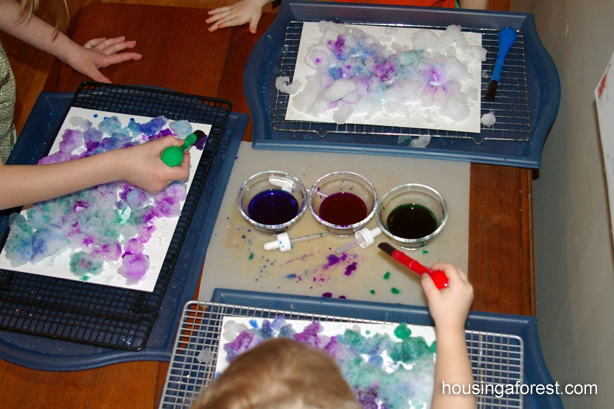
We used our art trays (found at IKEA in the kitchen section) with cooling racks set on top to contain the snow as it melted.  Watercolor paper works great since the paper will become soaked as the snow melts.  Pile the snow on to your paper and begin painting.  I limited the kids to green, blue and purple so we did not end up will “muddy” images.

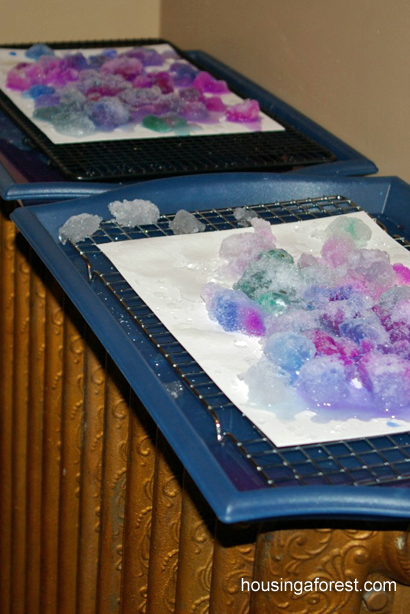
As the snow melts, the colors mingle together beautifully.  We added salt to encourage the snow to melt faster.  Partly because I love how salt creates great texture and sparkles with watercolors, but mostly we were impatient and wanted the snow to melt faster.  After the kids finished we placed the trays on the radiators to aide in the melting process.  I may have turned up the heat as well.  I love radiators for drying art work and for warming my coat and mittens in the winter!

As the snow melted it starts to pool and run so make sure that the tray is deep enough to catch all the drips.  I love how they turned out!

Transfer Printing

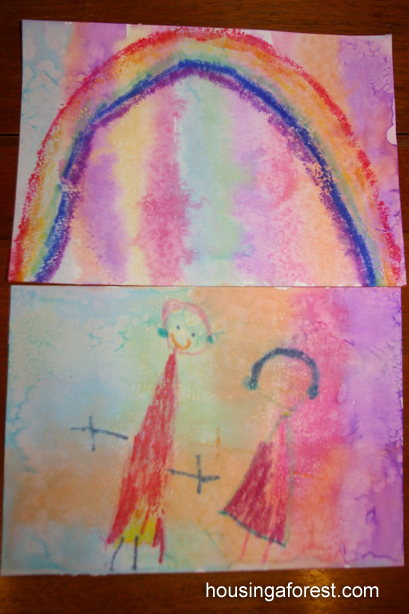
We made a fun discovery today.  Rubbing alcohol works to transfer drawings.  It is a super simple technique, but kids think it is magical.

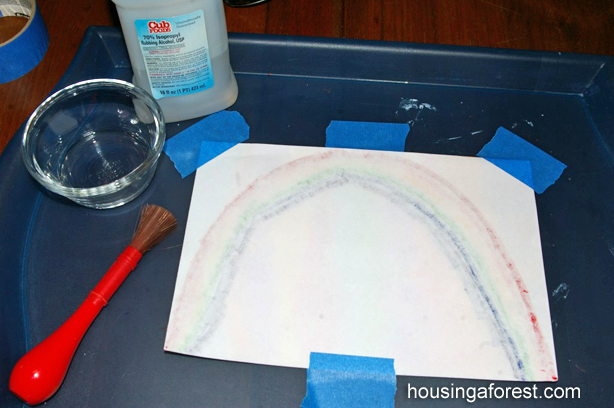
The kids drew pictures onto plain computer paper with water soluble markers.  Then made a background for their drawing to be transferred to.  For the background we used watercolor paper and watercolors, but regular paper works as well.

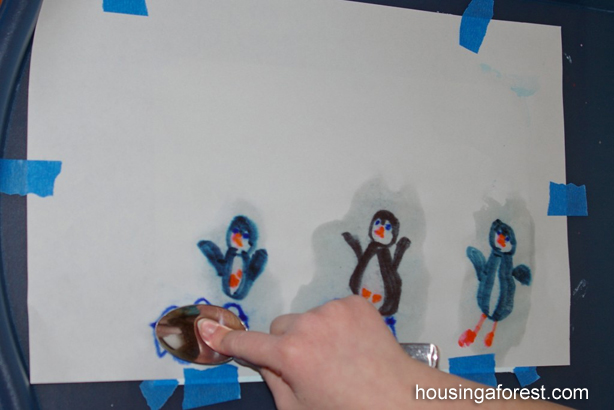
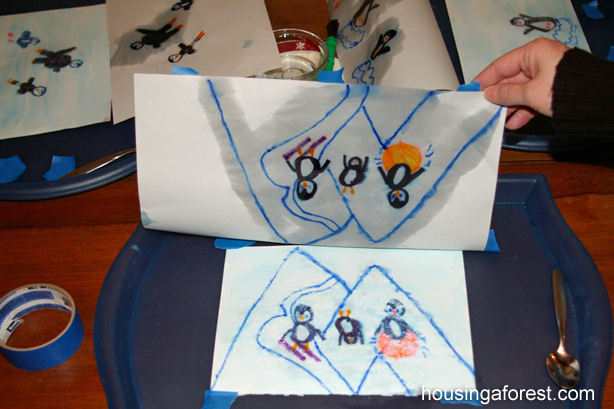
Tape your background image to your surface and place your drawing face down on top.  Paint a small amount of the rubbing alcohol onto the backside of the drawing then gently rub with a spoon to encourage the image to transfer to the watercolor paper.  Taping the paper will help the image not to wiggle and result in a crisper finished product.


Your transfer will be a mirror image of the original drawing, so be careful using words.  You could paint with water instead of rubbing alcohol, although that would would result in a blurry, blended image.

The rubbing alcohol transfers are also a bit fuzzy around the edges, but I love how the prints turned out.

Stamping Dice

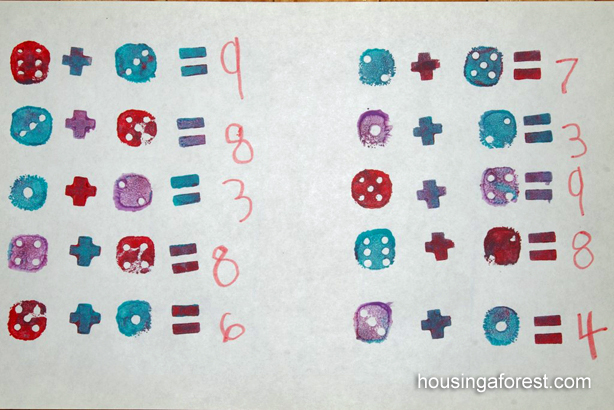
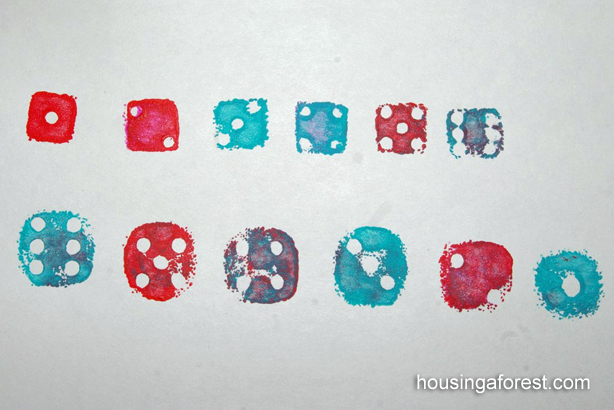
My kids love to stamp anything and everything.  Today they decided a simple Stamping Dice Activity, which became a great lesson in early math.

Stamping with Dice

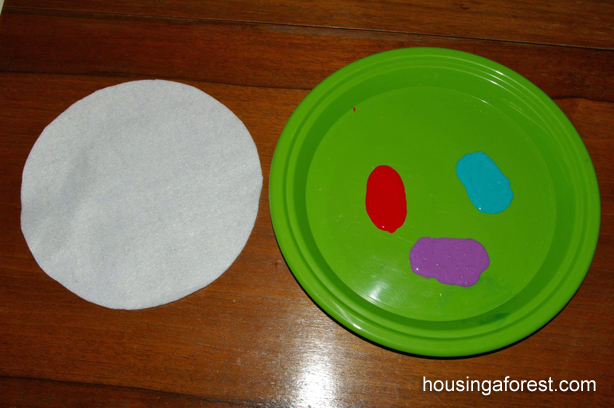
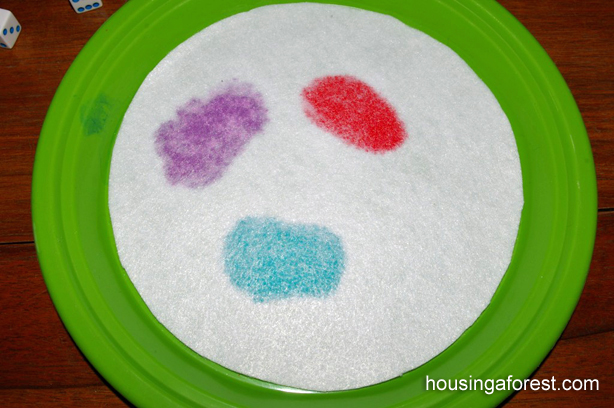
We make our own stamp pads, which is really simple.  All you need is felt, a plastic plate or lid, acrylic paint and salt.  Cut the felt into a circle to fit the bottom of your plate. Squeeze a small amount of acrylic paint onto the plate, sprinkle with a bit of salt and stir.  The salt will make the acrylic more fluid and easier to stamp with.  Don’t use to much salt or it will become too runny.  Lay the felt over the paint and let it absorb into the felt.

Stamping with Dice Quick, easy prep and your stamp pad is ready to go.  It is also reusable, which I love.  Just simply rinse the felt out lay flat to dry.  You can use tempera paint as well, I just like acrylics.

Stamping with Dice

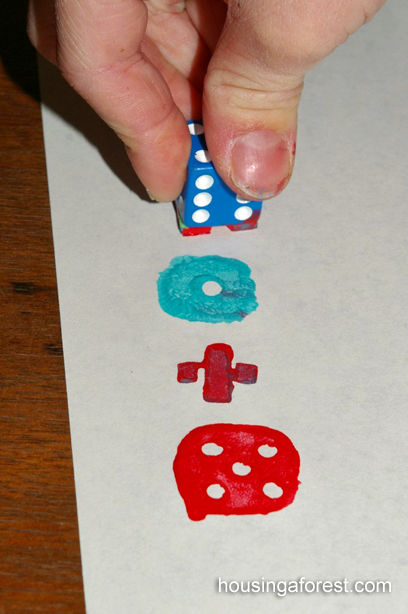
We made the plus, minus and equals signs by cutting up foam stickers to the right shape.  Foam stickers work great because they have depth and are already sticky.  We stuck the foam math signs onto dice and started stamping.

Stamping with Dice


Stamping with Dice

We also worked with the little ones on number sequencing.  I love when the kids can learn while playing.

Stamping with Dice

If you don’t want to miss out on any of the fun we are having at Housing A Forest, make sure to follow us on PinterestFacebookGoogle + and Twitter.