Science for Kids ~ How to make a barometer
Did you know that you can make your own barometer using items from around your home? I had no idea! My kids love science experiments, so I can’t wait to try it! Today, Joanna from The Blue Barn here sharing her DIY barometer tips and tricks. Until I read her post, I had no idea I could make one at home so easily. Love it! Read on for full instructions!
I’m so excited to be writing today for the lovely Tammy of Housing a Forest. My name is Joanna I’m originally from Wales, U.K but now live on the East Coast of the United States with my hubby, four children and way too many animals to remain sane. I’m chief creator at Blue Barn Living and you can normally find me and all our messy fun projects over on Instagram @thebluebarn.
Here in Connecticut we are heading into Spring and despite a few late snow storms we are expecting milder rainy weather because everyone knows that ‘April rain brings May flowers’. This makes it the perfect time of year to get the kids thinking a little about the weather and how we can predict some of these seasonal showers. Welcome the Barometer.
A Barometer as described by Google, (noun) is an instrument measuring atmospheric pressure, used especially in forecasting the weather and determining altitude.
The first Barometer is credited to an Italian called Evangelista Torricelli who is said to have invented it in 1643. However, there were thought to be a number of Italian scientists and astrologers working in the area of vacuums and air pressure at this time in the 17th century.
A barometer measures air pressure: A “rising” barometer indicates increasing air pressure; a “falling” barometer indicates decreasing air pressure.
Many barometers use Mercury tubes to help measure the air pressure but today we are going to make one that will work using a few items you have around your house.
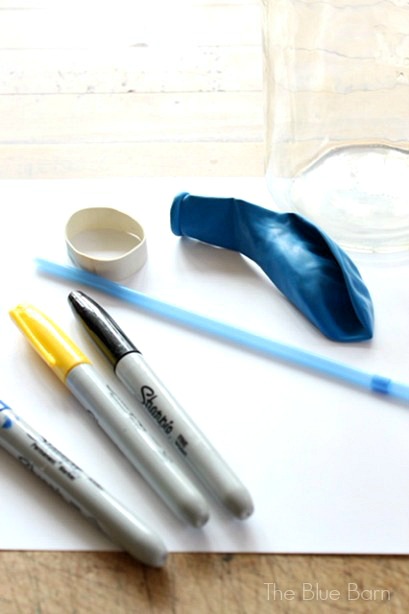
You will need
- Glass jar
- Balloon
- Pair of scissors
- Thick elastic band
- Drinking straw
- Pens
- Paper
- Tape
Step 1
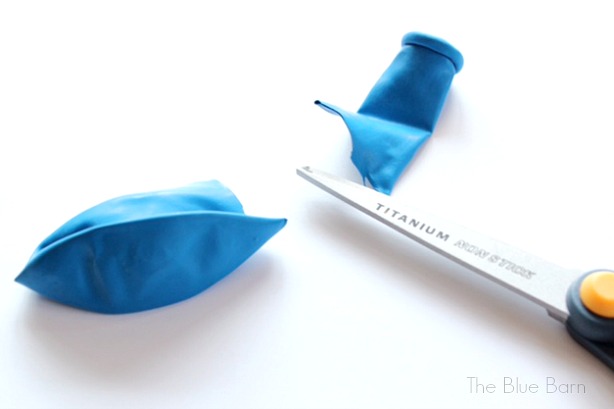
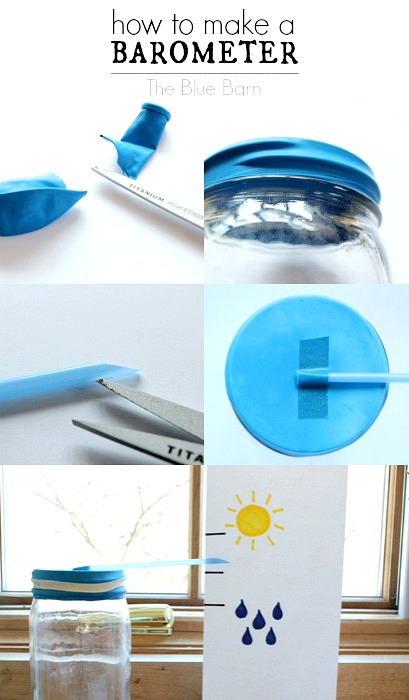
Take your balloon and cut the neck of the balloon off.
Step 2
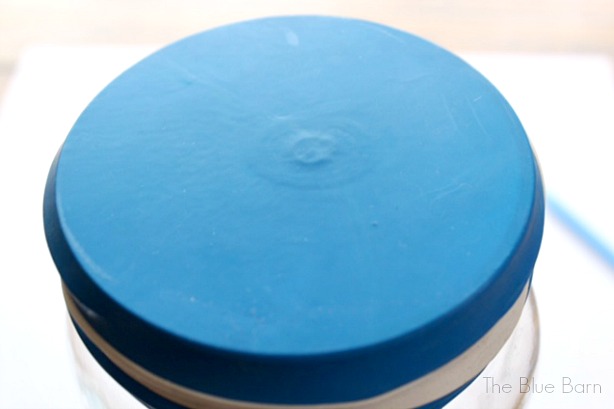
Taking the bottom part of the balloon stretch it over the neck of the jar. A younger child might need help with this as you should pull it as tight as possible so the balloon fits flat with no dimple in the middle.
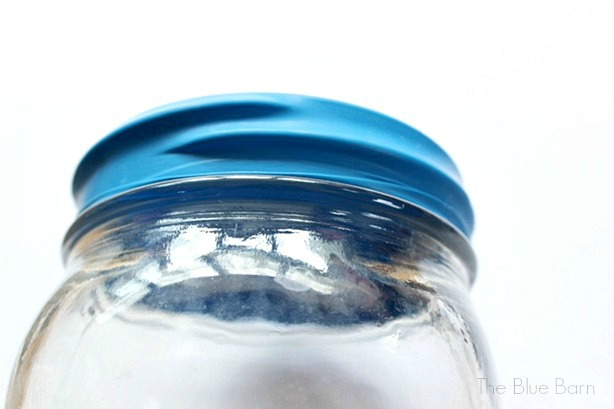
Secure the balloon in place with a thick elastic band. This now creates a sealed vacuum in the jar.
Step 3
Cut a straw at an angle to create a pointer.
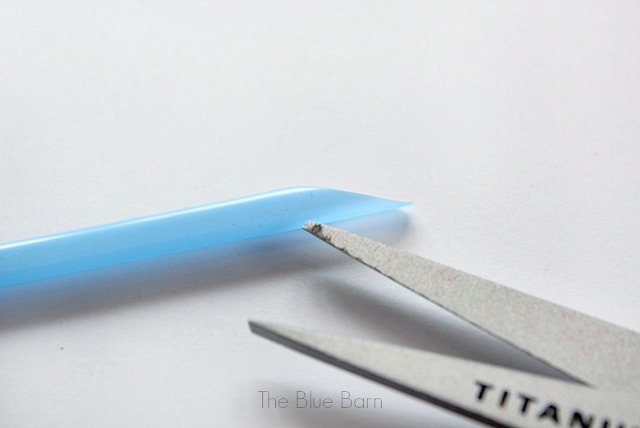
Tape the straw to the center of the balloon. Make sure the end of the straw ends in the center.

Step 4
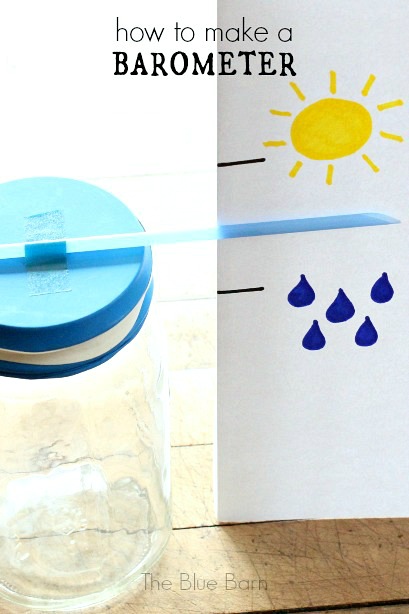
On a piece of card draw a sunshine towards the top and a rain cloud towards the bottom. Mark the paper in the middle where the straw currently rests.
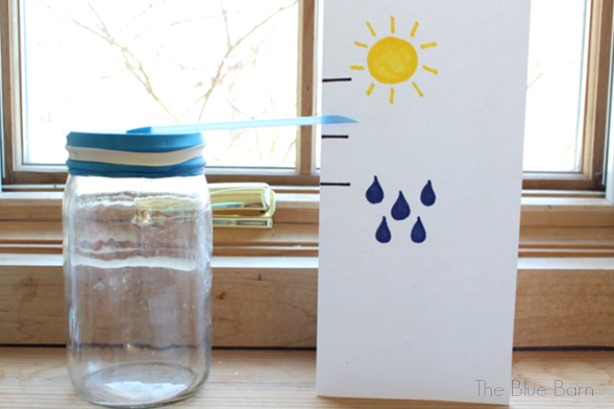
Now the children can step back and observe the barometer over time. What do they observe? Does their Barometer change? Does it move a lot or a little? Could they tell when it was raining v sunny? Ask them why they think this is happening?
You can explain to them that air is made up of tiny particles called molecules. The air inside the jar has been trapped by the balloon so no molecules can escape but they press against the balloon and the sides of the jar.
There is also air outside the jar, this air also contains molecules that push against the balloon from the other side.
If the pressure inside the jar is greater it pushes the balloon to dome outwards. If the pressure inside the jar is less the outside air molecules push the balloon inwards. The balloon causes the straw to point up or down depending on which way the pressure is greatest.
The weather causes changes in air pressure and thus changes in the arrow direction allowing you to see the weather prediction.
What other information can we gather from the weather? Think of other tools used in weather reporting. Could they come up with something to measure rainfall? What about wind direction or strength?
……………………………………………………………………………….
I can’t wait to try making our own Joanna, thanks so much for sharing! Off to go find some balloons so we can make one. Love it! Fingers crossed that our barometer reads sunshine for tomorrow!
We all love comments, so why not pop over and visit The Blue Barn her and tell her how much you enjoyed her post on Housing A Forest.