Cold Weather Science ~ how to blow a frozen bubble
Bubbles are always a hit no matter your age. We love creating colorful Bubble Snakes, and blowing beautiful bubble art however bowing bubbles in winter has been on our list for a while. Last week our temps dipped below -30 F, brrrrrrrrr. Since schools were closed, we decided to do a little cold weather science experiment. We dug through the box of sidewalk chalk, water guns and summer paraphernalia to find our bubble wands. I have to say I was more excited that the kids. I totally blame my excitement on Pinterest and all the beautiful photos out there. I cant wait to create our own frozen bubbles.

Ok so I was expecting to blow bubbles and feel like I was standing in a winter wonderland with frozen floating orbs all around me. Ha! I think that Pinterest made this one look so easy that I never assumed that we would struggle to get a bubble to actually freeze. About 1 in ever 15 bubbles that we blew actually froze. We were surprised by that since it was -33F. But don’t get discouraged, we had a blast experimenting and will be trying it again soon. I just think my expectations might have been a little distorted;)
My tips/tricks for getting bubbles to freeze is at the bottom of the post.
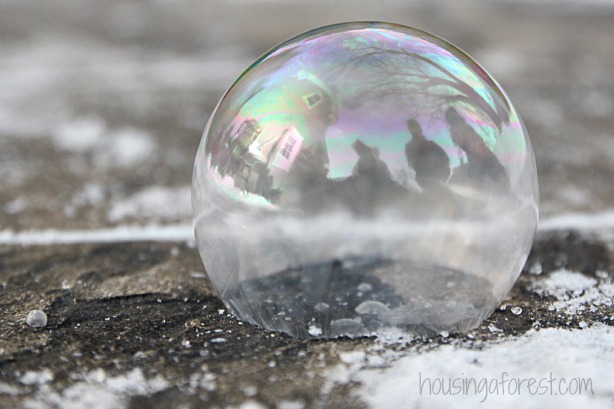
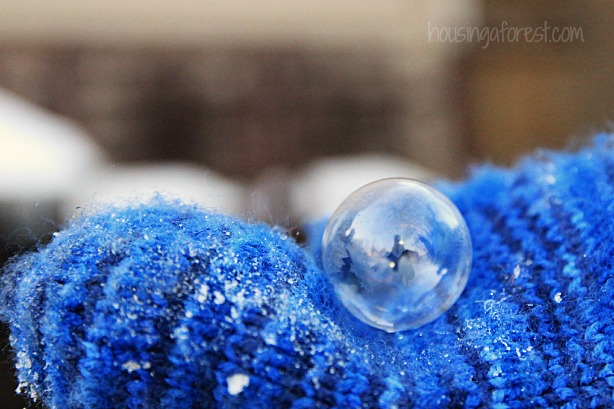
We were excited to watch the bubbles freeze. However, most of our bubbles shattered in mid air or as they hit the ground. A few stronger bubbles (as Annika called them) did make it to the ground. You can see the beginning of the crystalline patterns forming at the base of the bubble.
Notice my 3 kids reflection in the bubble above.

It was fascinating watching the frozen bubbles pop. Each reacted a little differently. The few that did land on the ground, were more interesting than the ones that just shattered in the air.
This one seemed to slowly deflate and almost implode on itself. It is just starting in the picture above. Notice the wrinkles on the left hand side.

While this bubble broke into 2 pieces. The top of the bubble float away, while the piece that was frozen to the ground fluttered in the breeze. It looked a bit like the shell of a cracked egg.
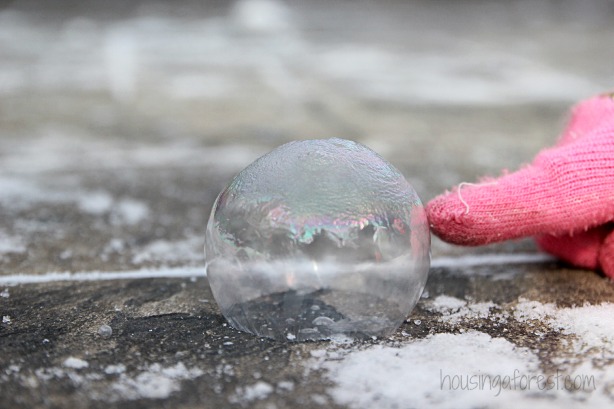
I love the frozen pattern on top of this bubble. Annika really wanted to see what would happen when she poked her finger through the bubble. Could she get it to pop?
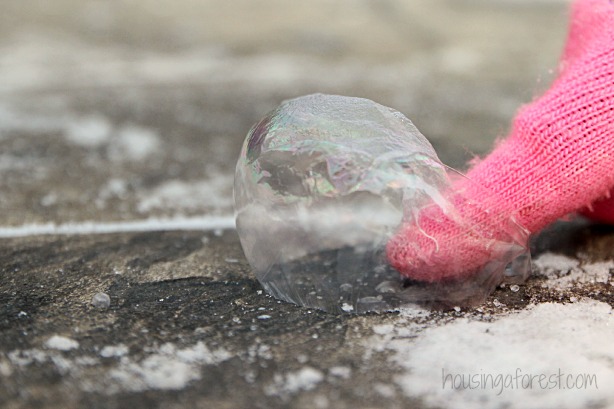
Instead of popping like a regular bubble, her frozen bubble gently let our air. We were amazed that it was able to hold part of its shape.
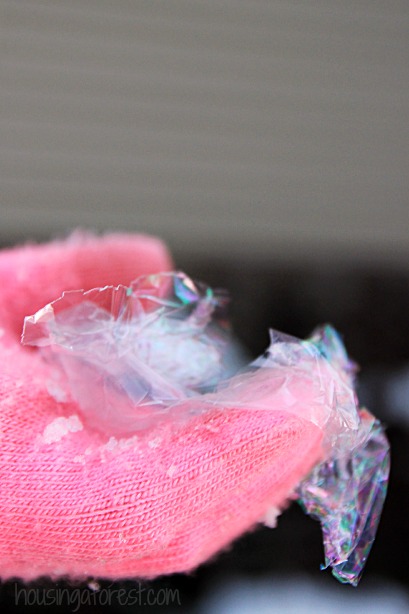
The kids had a blast collecting the frozen bubble film. Annika described it as light and delicate; almost like fairy wings. I couldn’t think of a better way to describe it. Since we had more popped bubbles than frozen rolling bubbles, they were able to collect lots of fairy wings.
We tried blowing bubbles with both a store bought bubble solution, and a homemade version. I thought that the homemade solution would work better, but they both preformed about the same. The success rate and freezing time both was pretty consistent with both solutions. I want to try a recipe with glycerin next time and compare those results.
Homemade Giant Bubble Solution
1 1/2 cups of water
1/2 cup of dish soap
1/4 cup of white corn syrup
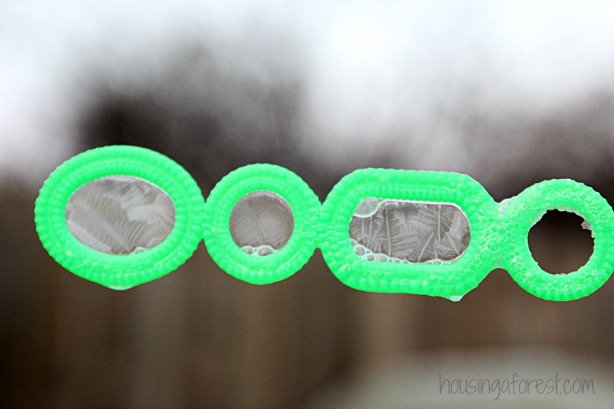
By accident, we discovered that the bubble solution will actually freeze in the bubble wand. It looked like frost on a windowpane. This photo doesn’t show the detail of the crystalline patterns very well, but take my word for it…it was beautiful.
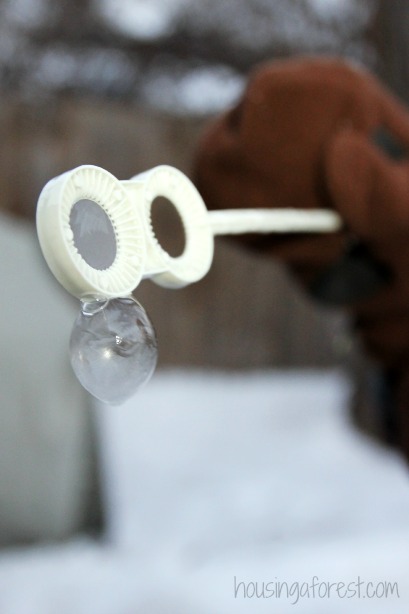
Different sizes of bubbles reacted differently. The smaller bubbles froze quicker and floated to the ground faster. Some of the really tinny bubbles dropped to the ground and shattered as soon as they froze. While the larger, giant bubbles floated high in the air and often got caught in a tree. The frozen bubble film look really cool hanging on the branch.
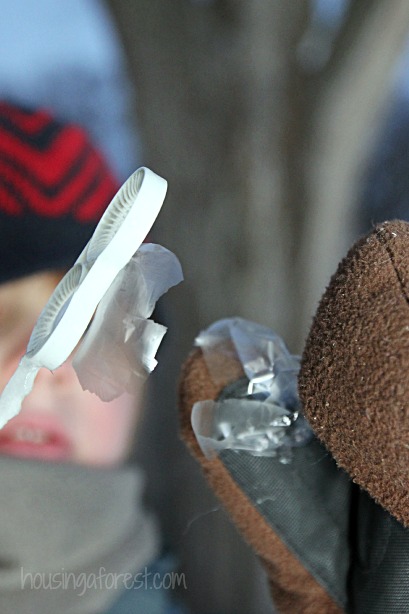
The kids loved watching the bubbles rip apart. Something you cant do with a regular bubble.
We deemed our little experiment a success, but we are going to try it again to see if we can improve our results. We think that was our main problem with this experiment, not the solution or the temperature. But how we were blowing the bubbles. The ones that the kids caught on the bubble wands worked perfectly. Next time we will try blowing our bubbles higher to see if the bubbles will freeze before hitting the ground.
Tips for creating a frozen bubble:
- The colder the temperature the better. We were blowing our bubbles at -30 F but I have heard it working at -12 F.
- Find an area that is sheltered from the wind. Even the slightest breeze will carry your bubble.
- Blow the bubbles high in the air so that as they float to the ground they have time to freeze.
- Depending on your temperature/weather ~ it can take anywhere from a few seconds to a few moments for the bubbles to freeze and start forming crystalline patterns.
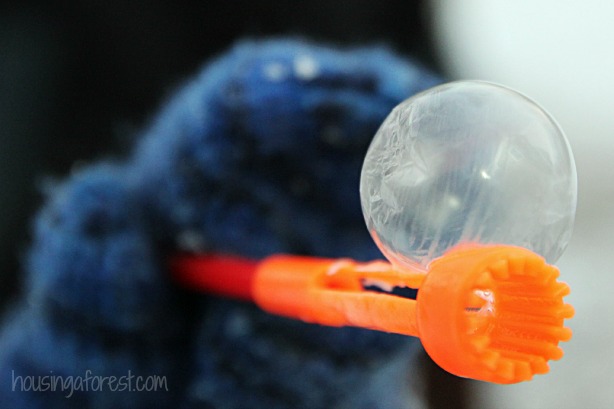
- We had the most success with catching our bubbles on the bubble wand. Most of the ones that fell to the ground shattered.
- Try blowing bubbles early in the morning or in the evening. This is the colder part of your day and will help your bubbles stay frozen.
- Wave your wand instead of blowing into the wand to make bubbles. The warm air from your lungs causes the bubble to take longer to freeze.
- Patience and persistence.
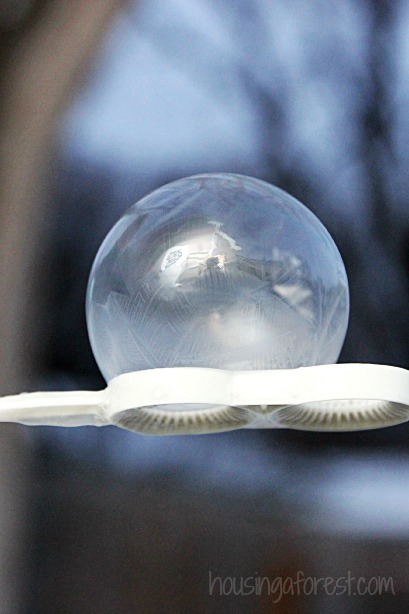
We giggled when the bubbles froze. They took on a life of their own, and were mesmerizing to watch. It was almost like watching Jack Frost paint on a mini little snowglobe. We could not get over how beautiful and unique the crystalline patterns were.
Have you tried blowing frozen bubbles? I would love to hear what worked best for you.