Spring Oil Pastel and Watercolor Resist

Spring Art Projects for Kids ~ Oil Pastel and Watercolor Resist

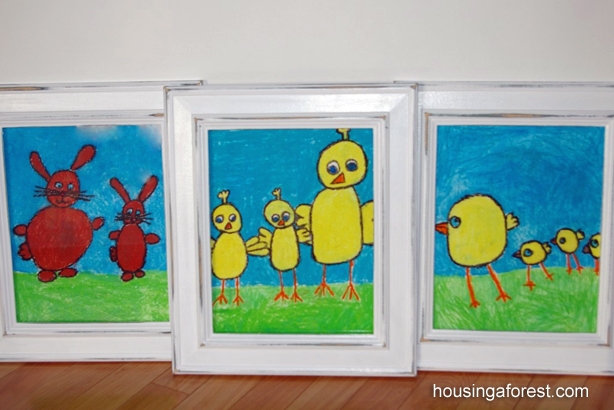
Are your looking for a simple spring art projects for kids to create?  My kids made these sweet spring animals using oil pastels and watercolors.  I love the little bunnies and chicks.   You might be surprised to learn how easy they were to make.
spring art projects for kids ~ Oil Pastel and Watercolor Resist

Each of my kiddos decided to draw spring animals and they did a quick sketch with pencil.  Normally I don’t like sketching first since it adds an extra step for the kids and eliminates some of the spontaneity of the piece.
spring art projects for kids ~ Oil Pastel and Watercolor Resist

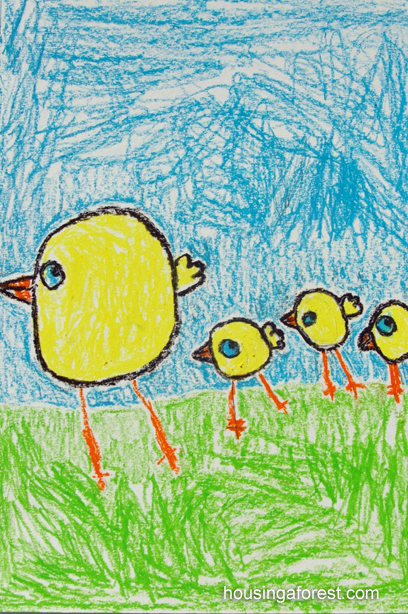
Next, they colored everything in with oil pastels.  I love working with oil pastels.  They go on creamy, and are easy to color with.  Bonus, they come in wonderful vivid colors.  The purpose of of this step is to create texture, so it is better not to color every space of the the paper leaving white space for the watercolor to highlight.

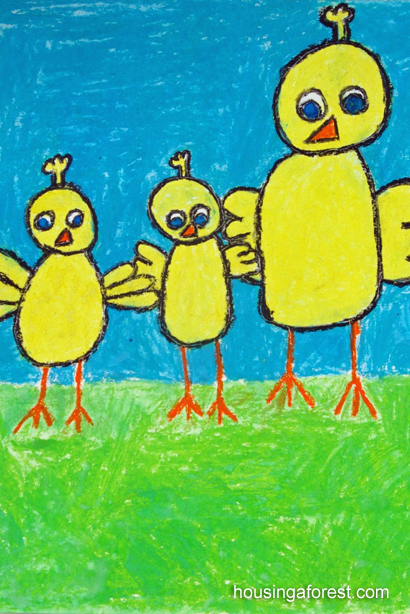
Once everything was fully colored we outlined the drawing like a coloring book with a black oil pastel.  I love this look, especially with kid art!  I helped outline some of the detailed areas since the pastels are a bit thick for little fingers to do detail work.
spring art projects for kids ~ Oil Pastel and Watercolor Resist

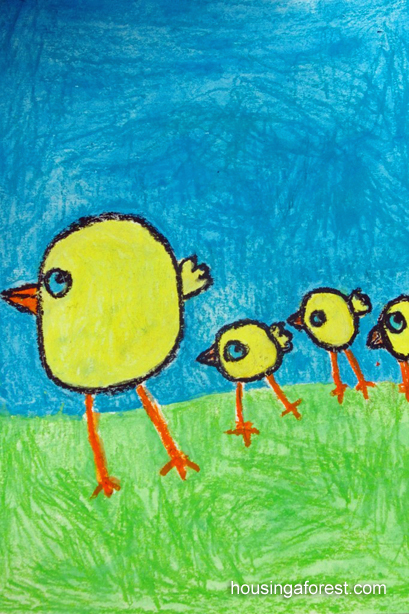
The kids then did a quick wash of watercolor over the entire piece.  The oil pastel will resist the watercolor creating a wonderful texture.  The kids matched the watercolor to the oil pastel color.

spring art projects for kids ~ Oil Pastel and Watercolor Resist

We touched up the black oil pastel after the watercolor wash.
spring art projects for kids ~ Oil Pastel and Watercolor Resist

So simple and cheery!  I love it!  I framed these cute little art pieces in frames that I found at the thrift store.  I painted the frames white and sanded the edges to reveal glimpses of their original green color.  There is nothing better than original art work your kids created to personalize and brighten a space.

spring art projects for kids ~ Oil Pastel and Watercolor Resist

For more Spring Art Projects for Kids, check out our:

 Spring Cherry Tree

Carrot Handprint Art

Rainbow Marble Painting

Georgia O’Keeffe Flowers

Spring Fingerprint Tree 

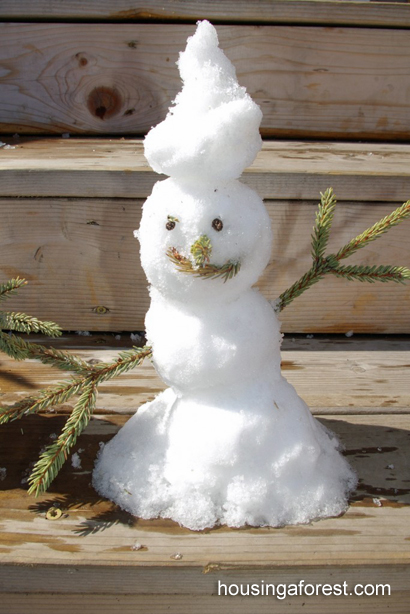
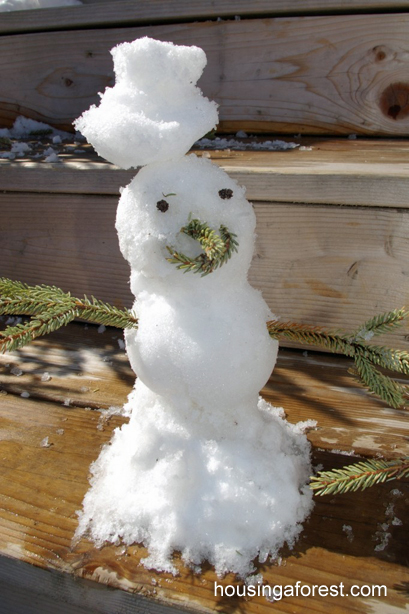
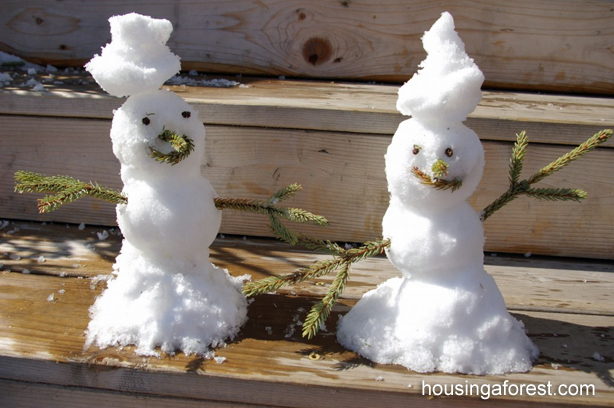
Spring Snowmen

Snow again!  At least it is warm and the perfect temp for building snowmen.  This is what the kids created on our back steps yesterday.  Cute little spring snowmen!

They used the snowball maker to create the body, and snipped apart the remains of out winter planter for the eyes, nose and mouth. I love how these mini snowmen turned out, especially their hats!

If you don’t want to miss out on any of the fun we are having at Housing A Forest, make sure to follow us on PinterestFacebook and Twitter.

Spring Subway Art

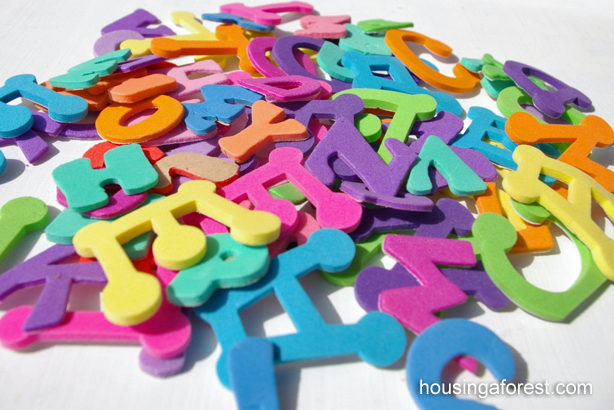
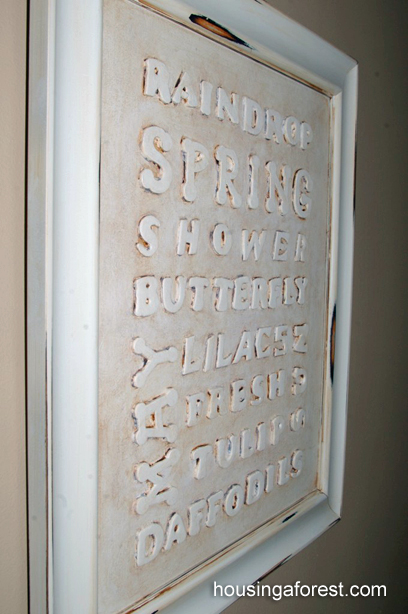
I love all the subway art that is being posted everywhere.  I finally got around to creating my own version.  I started with the foam letters that seem to be found in every corner of our home.  They have a cute basket that they are suppose to be contained in, however the little ones find them irresistible and carry them around.

The kids helped to sort out all the letters, finding as many different fonts as we could.

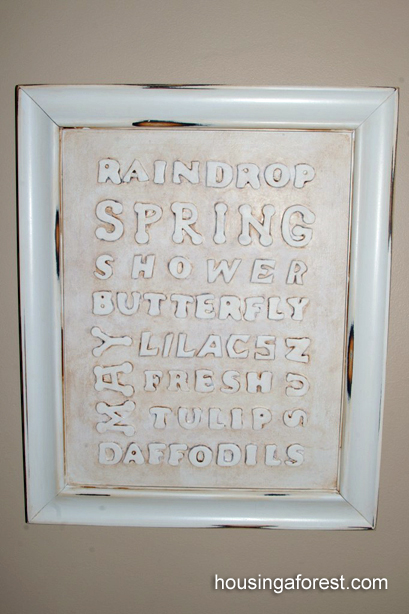
Then we sorted them into spring words and stuck them onto the back side of a piece of mat board.  I just eyeballed where each letter should be placed.

I then used Gesso to prime the letters and add a bit of texture.  Gesso is a great painting medium that can be found at art and craft stores.  It is a thick primer that can be used on most surfaces.  Since Gesso is thick, it is great for making messy brush strokes and creating texture.  I spray painted the frame white while I was waiting for the Gesso to dry.

Once everything was dry, I sanded the edges of the picture frame.  Then mixed up a brown glaze using brown acrylic paint and glazing medium.  I glazed both the picture frame and the letters by brushing on the glaze and gently wiped it back off with a damp rag.  I let the glaze sit in the groves and wiped most of the glaze off the flat areas creating texture and depth.  I then glazed back over the letter with white to add some highlights.  I love how it turned out!  You would never know that these are kid foam letters.

I will be linking to these parties.

Dancing Oobleck

How to make Oobleck Dance ~ Science Experiments

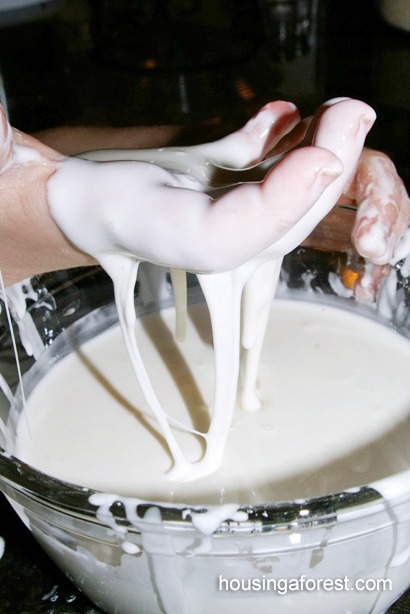
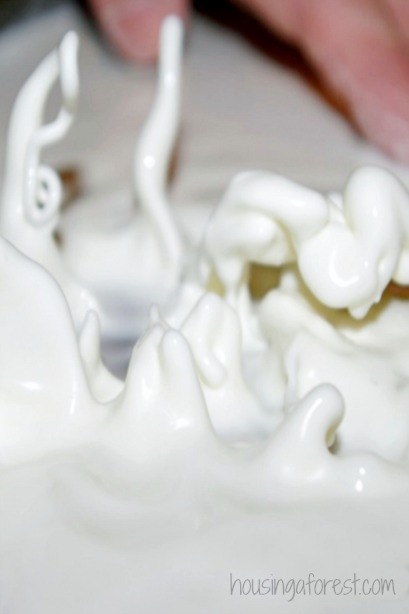
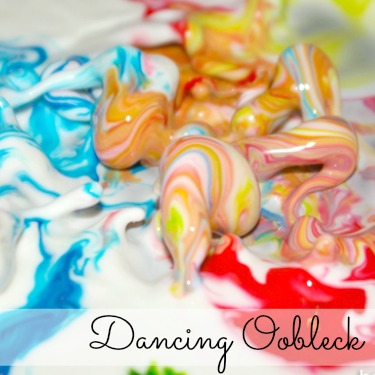
My kids love trying new Science Experiments, and play recipes.  Today we decided to combine the 2 and try to make our Oobleck dance using sound waves.  If you have never made it before, Oobleck is a mixture of cornstarch and water.  When played with fast it acts like a solid…when allowed to relax it acts like a liquid.

How to make Oobleck Dance ~ Sound Science Experiments for Kids.

This post contains affiliate links for your convenience.

When we saw a few youtube videos that involved Dancing Oobleck, we decided we needed to take our gooey play to the next level.

How to make Oobleck Dance ~ Sound Science Experiments for Kids

Dancing Oobleck Recipe

You will need to make your Oobleck thicker than usual.

How to make Oobleck Dance ~ Sound Science Experiments for Kids

Materials Needed:

Once your recipe is ready let the kids play for a bit while you set up the next step.

  • Subwoofer
  • a thin metal cookie sheet
  • a MP3 of an audio test tone ~ you will have to play a bit to see what works best with your equipment.
  • Food Coloring

How to make Oobleck Dance ~ Sound Science Experiments for Kids

Instructions:

  1. Place the cookie sheet onto the speaker of the sub, and pour in the Oobleck.
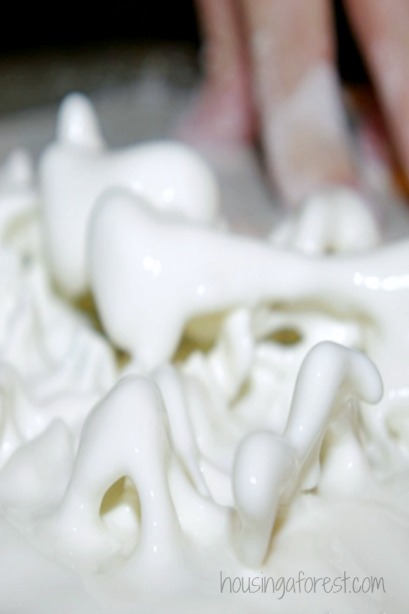
  2. You can download different test tones and play to see what works best for you.  We used 40 Hz, 50 Hz, and 63 Hz, and found that we needed to turn the volume way up.  We tried a number of different frequencies but these three seemed to work the best.  We did a search for subwoofer test MP3.  There are a number of different sites that you can use.
  3. Before you play the MP3 you will need to place your fingers on the edge of the cookie sheet with gentle pressure.  It took a bit of playing to see what worked the best, but the results were amazing.

How to make Oobleck Dance ~ Sound Science Experiments for Kids

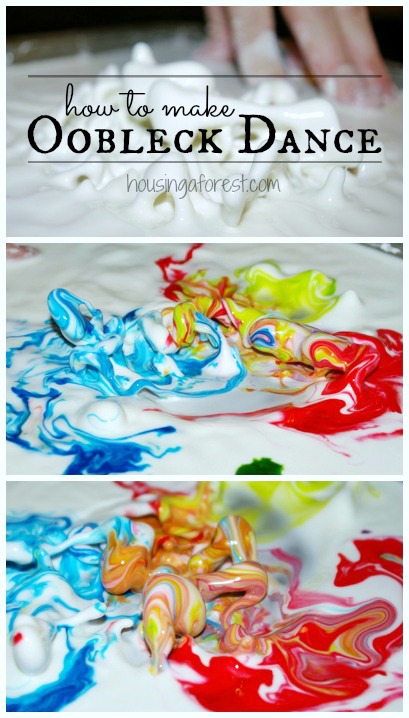
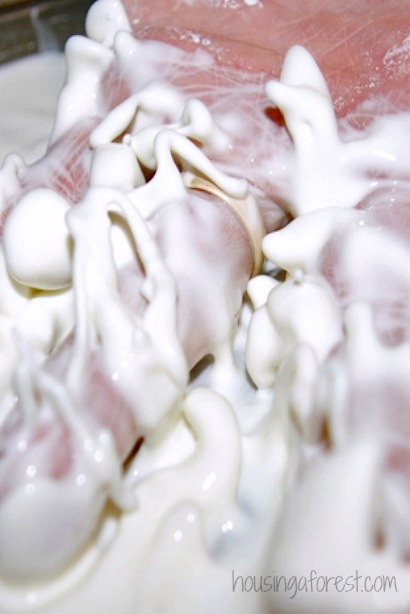
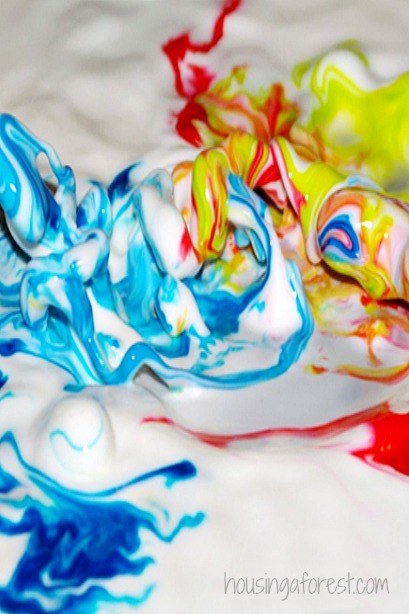
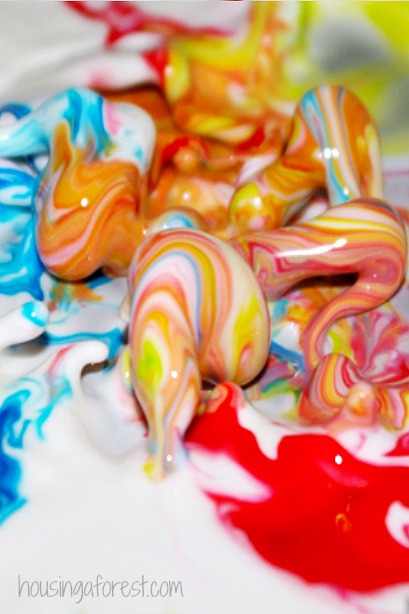
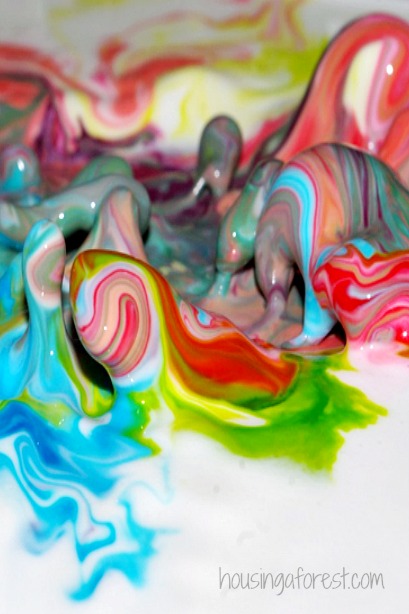
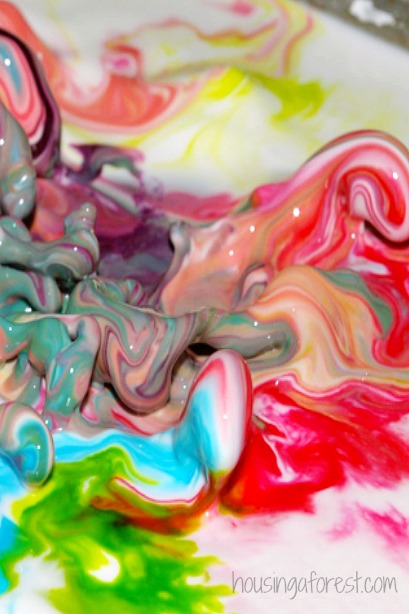
We decided to add food coloring to see what would happen.  I love how the colors dance together and you can see all the layers of each color.  This was the kids favorite part!

How to make Oobleck Dance ~ Sound Science Experiments for Kids

Amazing!

How to make Oobleck Dance ~ Sound Science Experiments for Kids

Subwoofer Test:

Here are a couple options for subwoofer tests although if you do a search for subwoofer test MP3 or MP3 of an audio test tone.

How to make Oobleck Dance ~ Sound Science Experiments for Kids

Tips and Tricks:

  • A thicker consistency of Oobleck works best.  Although with that said you don’t want it too thick.  We used a ratio of 2:1 (cornstarch to water).
  • If your oobleck is not dancing, you may need to change the volume on your subwoofer.  You can also try digging your finger in Oobleck to start the movement.  In the video the kids do it a few times just to get everything started.
  • Keep experimenting until you get it to work.  Honestly we played around for a bit until it worked for us.  Everyone will be working with different equipment so what worked for us might be a little different for you.

How to make Oobleck Dance ~ Sound Science Experiments for Kids

After we were all done I let the kids play with the colored Oobleck.  They loved it, but a word of caution if stained colored fingers are not your thing.  We giggled at the kids as they tried to wash the color off.  I’m sure they will be sporting grey blue hands for a few days.

For more great experiments, check out our:

Walking on Eggs

Ivory Soap Experiment 

Packing Peanut Experiments

Exploding Peep Geysers

Shooting Water Experiment

Submarine Play

Spring break week!  I am so glad to have some special time with the kids this week.  Love it!  We stared off with this simple submarine play exercise.

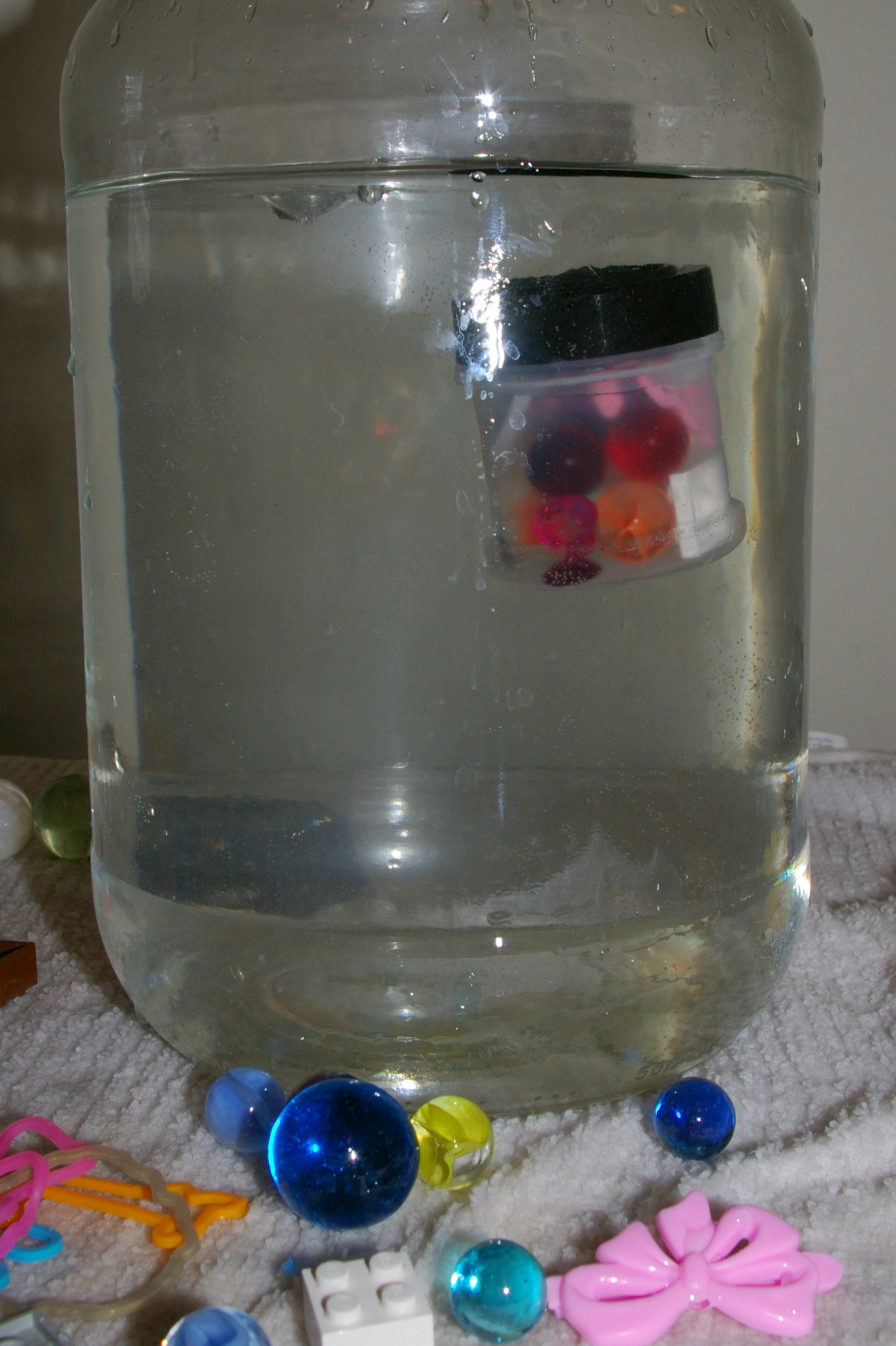
This morning I asked the kids if they could construct a simple submarine.  My little ones often experiment with different items to see if they will sink or float, but today the challenge was focused on the older ones.

All you need to create your own submarine play stations are:

  • a large glass container
  • numerous small items (silly bands, marbles, legos, beads, buttons, coins…)
  • an empty plastic spice container
  • water.

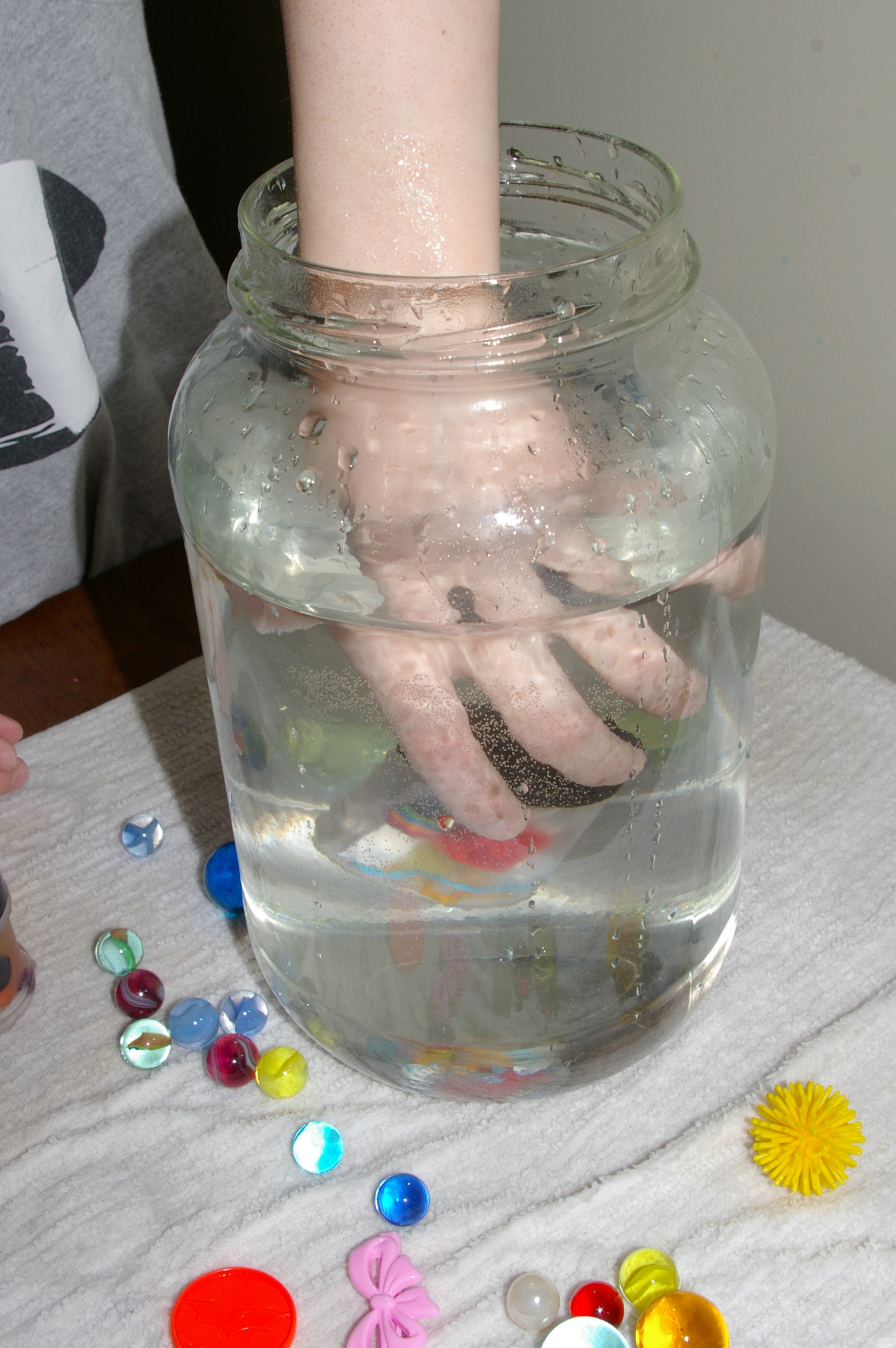
The kids ran all over the house collecting things that would fit in the small vessel that would become the submarine.  I loved listening to all the giggles as they were discussing which items would work.

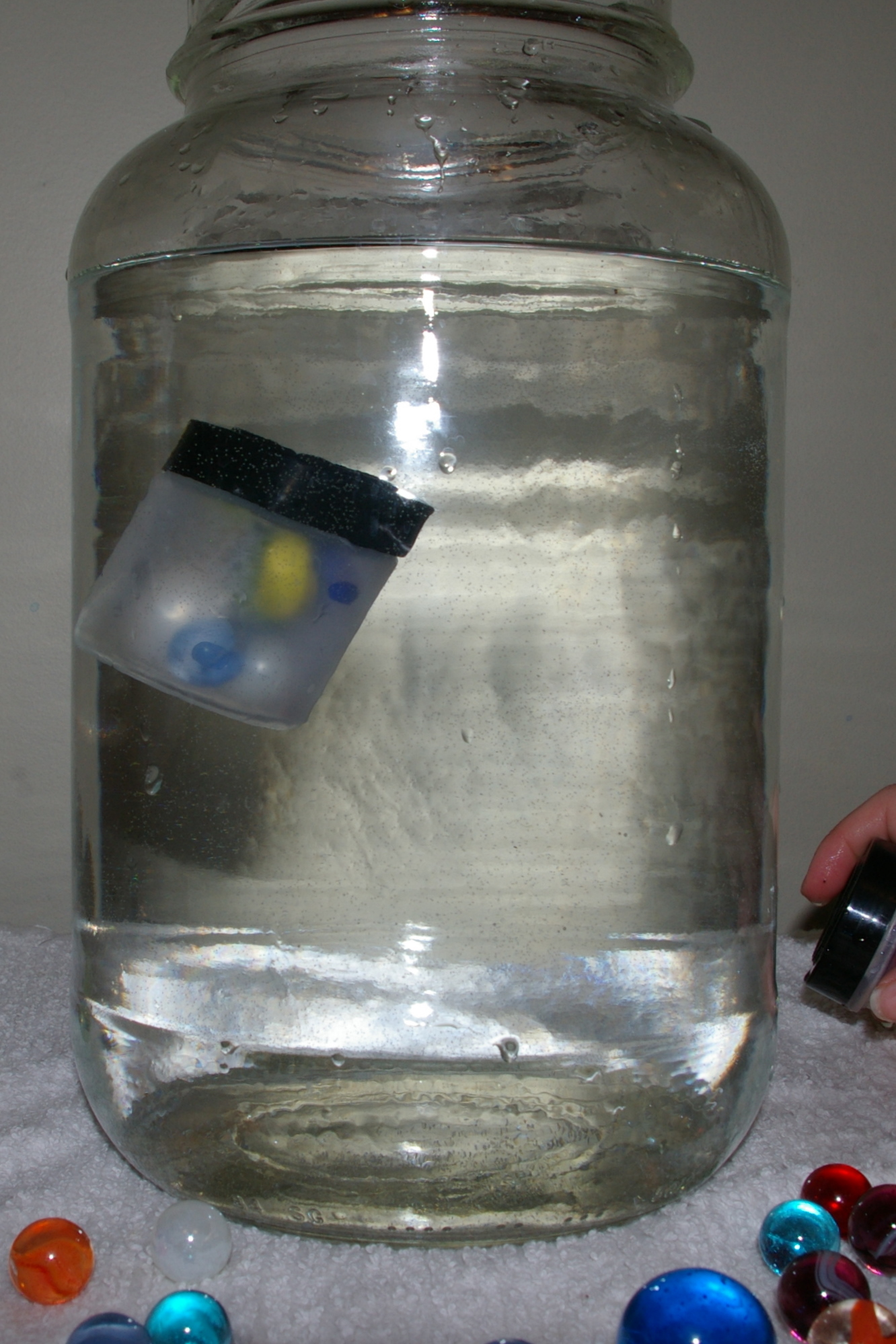
The kids found that it took quite a number of items to get the submarine to sink to the bottom.  They also thought it was interesting that objects that would normally sink would float inside the sub.

We talked about density and how the air inside the container made the heavy objects buoyant.  Kaleb decided he needed to remove the air out of his container to get it to his sub to submerge.  It was fun watching the kids figure out the problem.  Eventually they decided if they filled the sub with water there would be no room for air.  I love watching the process kids go though when left alone to explore.  After their brilliant discovery of using water, I explained to them that real submarines also use water to submerge themselves.  After numerous attempts using different amounts of water and a combination of different objects, they each finally created a perfect sub that stayed in the center of the jar.

Here is a link to a fun list of great experiments that my kids love.